
A business venture proposal puts an opportunity in front of someone who can fund it, partner on it or approve it. It sets out what the venture is, what it will cost, what the return looks like and why you are the person to run it.
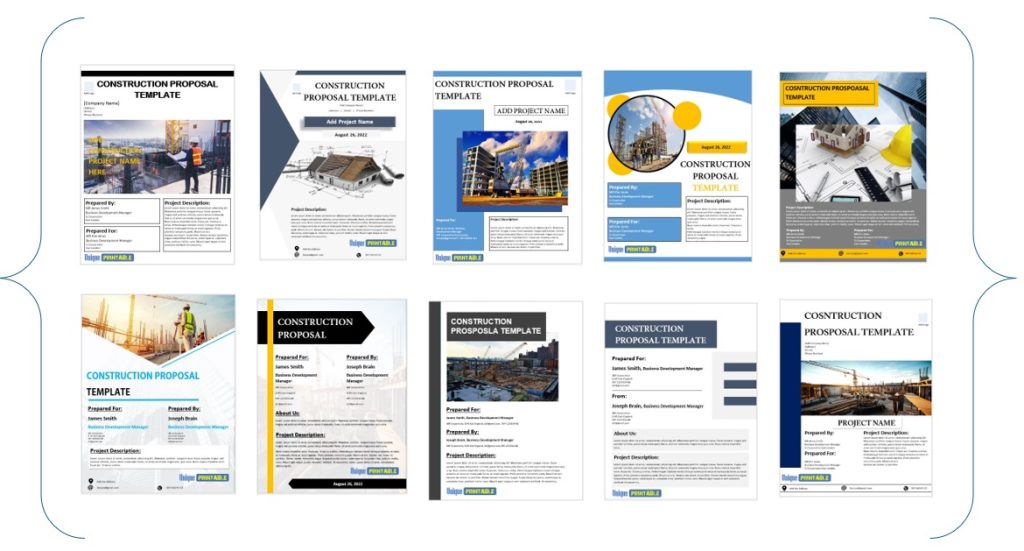
Below are 10 free business venture proposal templates in MS Word. Each has the standard sections already structured — executive summary, market analysis, financials, timeline and terms — so you are filling in substance rather than building a document from an empty page.
1. Standard Business Venture Proposal

The full structure: executive summary, opportunity, proposed solution, financials, timeline and terms. Start here if you are unsure what the reader expects, because this covers what most of them look for.
MS WORDDownload Now ↓
2. Startup Venture Proposal for Investors

Leads with the funding amount, what it will be spent on and the projected return. Investors read the summary and the numbers first, so this layout puts both where they will actually be seen.
MS WORDDownload Now ↓
3. Joint Venture Partnership Proposal

Sets out what each party contributes, how profits divide and who decides what. The contribution and exit sections are the ones worth labouring over — joint ventures rarely fail over the idea, and often over who owns what when it ends.
MS WORDDownload Now ↓
4. New Product Launch Proposal

Market research, competitor pricing, positioning and a launch timeline. Built for taking a product proposal to a board or a distributor rather than to an outside investor. The launch spend is easier to justify with a marketing budget attached.
MS WORDDownload Now ↓
5. Business Expansion Proposal

Opens with existing trading performance before setting out the expansion and the capital needed. The advantage over a startup proposal is that you have real numbers — use them, because a track record is the strongest argument in the document.
MS WORDDownload Now ↓
6. Short-Form Venture Proposal

Two pages: the opportunity, the ask and the headline numbers. Use it as a first approach, where a forty-page document would simply go unread, and keep the full version for people who ask for it.
MS WORDDownload Now ↓
7. Service Business Proposal

Scope of work, deliverables, rates and what falls outside the engagement. For consultancies and agencies, the exclusions section prevents more disputes than any other part of the document.
MS WORDDownload Now ↓
8. Venture Proposal with Financial Projections

Expanded financial tables: three-year revenue and cost projections, cash flow and a break-even point. Pick this one when the reader is a lender or a finance committee rather than a strategic partner.
MS WORDDownload Now ↓
9. Formal Proposal with Terms and Appendix

Cover page, contents, numbered sections, terms and conditions and an appendix for supporting documents. The right format when responding to a formal request for proposals, where structure is often part of the scoring.
MS WORDDownload Now ↓
10. Blank Proposal Template

Section headings and formatting with no preset content, so you can shape it around whatever the recipient has asked for. Useful when a client has specified their own required sections.
MS WORDDownload Now ↓
What a Business Venture Proposal Should Contain
Readers rarely get past page two unless the first page earns it. These are the sections that matter, roughly in the order they should appear.
- Executive summary — the whole proposal in half a page: what, how much, what return. Write it last, and assume it is the only part some readers will finish.
- The opportunity — the problem or gap, with evidence rather than assertion.
- Your solution — what you will actually do, specifically enough that someone could picture it running.
- Market and competition — who else does this and why your approach differs. Claiming no competition reads as insufficient research, not as an advantage.
- Financials — capital required, how it will be spent, projected revenue and costs, and when the venture breaks even.
- Timeline and milestones — dated stages so progress can be measured against something.
- Team — who is involved and what makes them capable of delivering this.
- Risks — the main ones and how you would handle them. Including this builds more credibility than omitting it.
- Terms and appendix — conditions of the offer, with supporting data at the back rather than in the body.
How to Write a Proposal That Gets Read
- Find out what the reader is judging it against. If there is a request for proposals, follow its structure exactly. Proposals are frequently rejected on format before anyone assesses the idea.
- Lead with the ask. State the amount and what it buys on the first page. Making a reader hunt for the number is the most common error in these documents.
- Use real figures, and show where they came from. A projection with a stated basis is persuasive; the same number unexplained is not.
- Write for the specific recipient. A lender cares about repayment, a partner about control, an investor about growth. The same venture needs a different emphasis for each.
- Name the risks yourself. Every reader will think of two or three. Raising them first, with your answer attached, is far stronger than being asked.
- Cut it down. Move detail to the appendix and keep the main document as short as the subject allows.
- Proofread it, then have someone else proofread it. Errors in a document asking for money say something about how the money would be handled.
Common Reasons Proposals Are Rejected
The Numbers Are Not Credible
Hockey-stick revenue curves with no stated assumptions are the fastest route to a no. Conservative projections you can defend will take you further than optimistic ones you cannot.
The Ask Is Unclear
If the reader finishes the document uncertain what is being requested, or what they get in return, there is nothing for them to say yes to. Both belong on page one.
No Evidence of Demand
A well-presented solution to a problem nobody has confirmed is the most common weakness in first-time proposals. Even informal evidence — conversations, a waiting list, a pilot — is better than none.
It Reads Like a Template
A proposal that could describe any business will be treated as one. Replace every placeholder with something specific to your venture before it goes out. Where a client has asked only for pricing rather than a full proposal, a quotation template is the more appropriate document, and sending a proposal instead can look like you did not read the request.
Frequently Asked Questions
What is the difference between a business proposal and a business plan?
A proposal is persuasive and written for an external reader — it asks for a decision. A business plan is operational and written mainly for internal use, setting out how the business will run. Proposals are shorter and argue a case; plans are longer and describe a system.
How long should a business venture proposal be?
As short as the subject allows. Ten to twenty pages suits most ventures, with supporting detail in an appendix. For a first approach, the two-page version above works better — you can always send more when asked.
Should I include financial projections if the venture has no trading history?
Yes, but state the assumptions behind them. Readers understand that a startup projection is an estimate; what they are assessing is whether your reasoning is sound. Unexplained numbers undermine the whole document.
Is a business venture proposal legally binding?
Generally a proposal is an offer rather than a contract, and the terms section usually states that. Whether and when it becomes binding depends on how it is worded and on local contract law, so have a lawyer review anything substantial before you send it.
Can I edit these templates in Google Docs?
Yes. Upload the .docx file to Google Drive, right-click it and choose Open with → Google Docs. Export to PDF before sending, so the formatting holds and the document cannot be edited in transit.
Are these templates free for commercial use?
Yes. Use them to pitch any venture at no charge and add your own branding. You cannot resell the template files themselves.


Pingback: 10+ Free Investment Proposal Templates — Word Format