A government project proposal is a bid for public-sector work. Unlike a commercial pitch, it is usually scored against published criteria by an evaluation panel — which means the structure, the completeness and the compliance matter as much as the quality of what you are offering.
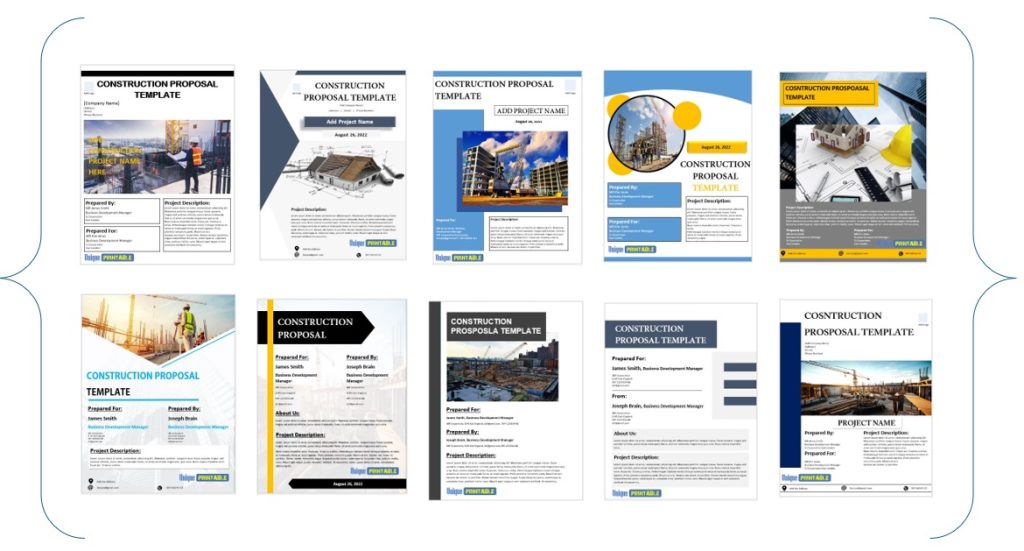
Below are 10 free government project proposal templates in MS Word, covering tender responses, technical and financial submissions, grant applications and capability statements. All sections are editable. Before using any of them, read the tender documents: where an authority specifies a format, that format overrides every template here.
1. Standard Government Project Proposal

The full structure: executive summary, background, objectives, scope, methodology, programme, budget, team and risk. Start here when the authority has not prescribed a format of its own.
MS WORDDownload Now ↓
2. Tender and RFP Response

Organised to mirror a request for proposals section by section, so an evaluator can find each answer where they expect it. Reordering a tender response to suit your own narrative is a reliable way to lose marks you had earned.
MS WORDDownload Now ↓
3. Technical Proposal

Methodology, work plan, staffing and deliverables, with no pricing anywhere in it. Many public tenders require technical and financial submissions to be kept entirely separate, and including a price here can invalidate the bid.
MS WORDDownload Now ↓
4. Financial Proposal and Bill of Quantities

The pricing submission: itemised costs, unit rates, taxes and the total bid price. Where the authority supplies its own pricing schedule, use theirs rather than this one — substituting your own format is a common disqualification.
MS WORDDownload Now ↓
5. Compliance Matrix Proposal

A table mapping every stated requirement to the clause and page where you answer it. Tedious to complete and disproportionately effective, because it lets an evaluator confirm compliance without hunting for it.
MS WORDDownload Now ↓
6. Infrastructure and Public Works Proposal

Built for roads, drainage, buildings and similar works: site details, materials, plant, programme and a safety method statement. For the construction detail behind it, the construction proposal templates go further into build-stage specifics.
MS WORDDownload Now ↓
7. Grant and Public Funding Application

Structured around a need statement, intended outcomes, beneficiaries and a justified budget. Grant assessors look for demonstrated need and measurable outcomes rather than commercial capability, which makes this a different document from a tender bid.
MS WORDDownload Now ↓
8. Community and Social Project Proposal

For NGOs and community organisations bidding for public programmes: beneficiaries, stakeholder consultation, delivery partners and how impact will be measured after the money is spent.
MS WORDDownload Now ↓
9. Capability Statement and Pre-Qualification

Company registration, certifications, financial standing, comparable projects and references. The document that gets you onto an approved supplier list, which in public procurement often has to happen before you can bid at all.
MS WORDDownload Now ↓
10. Blank Project Proposal

Headings and formatting with no preset content, so you can rebuild the structure to match a published tender exactly. Usually the right choice, since most authorities dictate their own section order.
MS WORDDownload Now ↓
What a Government Project Proposal Must Contain
Public-sector bids are scored, not read sympathetically. Each of these sections usually carries marks, and an omission scores zero rather than inviting a follow-up question.
- Executive summary — the offer in a page, written so a non-specialist on the panel can follow it.
- Understanding of the requirement — restated in your own words. This demonstrates comprehension and is frequently scored in its own right.
- Methodology — how the work will actually be delivered, step by step.
- Work programme — phases, durations, milestones and deliverable dates.
- Team and capability — named personnel with relevant experience, plus comparable projects delivered.
- Pricing — in the authority’s format, in the correct envelope or file.
- Risk management — identified risks, likelihood, impact and your mitigation for each.
- Quality and reporting — how progress is measured and how often the authority hears about it.
- Mandatory forms and declarations — registration, tax status, insurance, conflict of interest. Missing paperwork disqualifies more bids than weak content does.
How to Prepare a Winning Public-Sector Bid
- Read the whole tender document before writing anything. Including the annexes. The evaluation criteria and their weightings tell you where to spend your effort, and they are rarely where you would guess.
- Build a compliance checklist first. Every requirement, form, certificate and word limit, with a tick against each. Work through it again the day before submission.
- Answer in the order asked, using their headings. Evaluators score section by section against a sheet. Make each answer easy to locate and you are scored on content rather than on their patience.
- Write to the weightings. If methodology carries forty per cent and company history five, the page count should reflect that rather than the reverse.
- Be specific rather than enthusiastic. “Weekly written progress reports every Friday to the named contract manager” scores; “excellent communication throughout” does not.
- Price realistically. Many public tenders assess value rather than lowest cost, and an unrealistically low bid raises deliverability concerns that can cost you the award.
- Submit early. Deadlines in public procurement are usually absolute — a bid arriving minutes late is normally rejected unopened, whatever the reason.
- Ask for a debrief afterwards. Win or lose, most authorities will explain the scoring, and that feedback is the most useful thing available for the next bid.
Why Government Bids Fail
Non-Compliance, Not Weak Content
A missing certificate, an exceeded word count, a form left unsigned, a late submission. These remove bids before anyone assesses the substance, and they account for a large share of unsuccessful tenders.
Answering a Different Question
Reusing a previous proposal and adjusting the names produces an answer that addresses the last authority’s requirement. Evaluators recognise this immediately, and it reads as a lack of interest in their project.
Claims Without Evidence
Assertions about experience and quality carry little weight unsupported. Named projects, dates, values and contactable references are what convert a claim into a score.
Pricing That Does Not Match the Method
A technical proposal describing extensive site supervision alongside a price with no supervision cost in it signals that one document was written without reference to the other. Where a programme forms part of the submission, a monthly schedule helps keep the stated timeline consistent with the resourcing you have priced.
Frequently Asked Questions
Can I use a template if the authority has its own format?
No — use theirs. Where a tender specifies a structure, forms or a pricing schedule, submitting a different format risks disqualification regardless of how good the content is. Use these templates for drafting and internal preparation, then transfer the content into the required documents.
What is the difference between a technical and a financial proposal?
The technical proposal explains how the work will be done and contains no pricing. The financial proposal contains the costs. Many public procurements require them submitted separately and open the technical one first, so that price does not influence the quality assessment.
Do procurement rules differ between countries?
Considerably. Thresholds, advertising requirements, evaluation methods, challenge procedures and mandatory documentation all vary by country and often by level of government. Treat the tender documents and your local procurement regulations as the authority on what is required.
How long should a government project proposal be?
As long as the tender permits and no longer. Many specify page or word limits per section, and exceeding them can mean the excess is not read or the bid is marked down. Where no limit is given, match the length to the weightings.
Can I edit these templates in Google Docs?
Yes. Upload the .docx file to Google Drive, right-click it and choose Open with → Google Docs. Export to PDF before submitting unless the tender asks for an editable file.
Are these templates free for commercial use?
Yes. Contractors, consultants and organisations can use and brand them at no charge. You cannot resell the template files themselves.