A software development proposal does two jobs: it wins the work, and it defines what “finished” means. The second matters more than most developers expect — the majority of project disputes come from a scope that was never written down precisely enough to argue about.
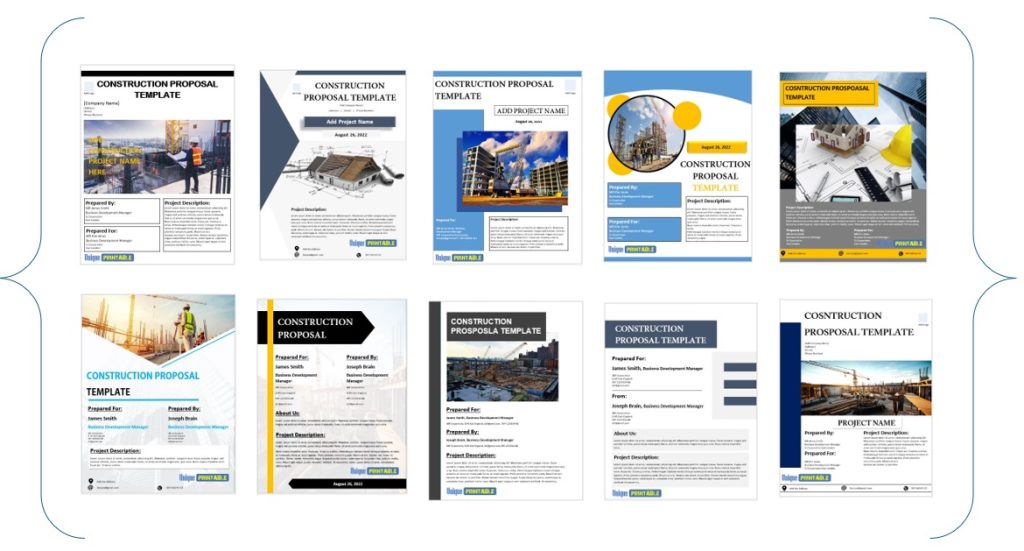
Below are 10 free software development proposal templates in MS Word, covering fixed-price projects, time-and-materials work, mobile apps, web applications and ongoing support. All sections are editable, including the deliverables and payment milestone tables.
1. Standard Software Development Proposal

The full structure: understanding of the requirement, proposed solution, scope, technology stack, timeline, team, pricing and terms. Start here when the client has not specified a format.
MS WORDDownload Now ↓
2. Fixed-Price Project Proposal

A defined deliverable list against a fixed total, with payment tied to milestones and an explicit change-request process. Fixed price only works when the scope is tightly specified, so the exclusions section is the one to labour over.
MS WORDDownload Now ↓
3. Time and Materials Proposal

Hourly or daily rates by role, estimated hours per workstream and a cap or review point. Suits work where requirements will evolve — and the estimate should be presented as an estimate rather than a disguised fixed price. Billing against it runs naturally into an hourly service invoice.
MS WORDDownload Now ↓
4. Mobile App Development Proposal

Platforms covered, screen count, native against cross-platform, backend requirements and app store submission. State who holds the developer accounts and who handles store review, because that is routinely assumed and rarely agreed.
MS WORDDownload Now ↓
5. Web Application Development Proposal

Pages and modules, user roles and permissions, third-party integrations, hosting and browser support. The integrations section is where estimates most often go wrong, so name each one and say what you are assuming about its API.
MS WORDDownload Now ↓
6. Enterprise and Custom Systems Proposal

Architecture, data migration, integration with existing systems, user training and rollout. For replacing something a business already runs on, where migration and training usually cost more than the build itself.
MS WORDDownload Now ↓
7. Agile and Sprint-Based Proposal

Sprint length, team composition, cost per sprint and how the backlog is prioritised. Sells capacity over a period rather than a fixed deliverable, which needs explaining carefully to clients expecting a fixed total. Tracking the backlog works well on a project to-do list.
MS WORDDownload Now ↓
8. Maintenance and Support Proposal

Support hours, response and resolution targets, included updates and a monthly retainer. Distinguish bug fixes from new features explicitly — without that line, every request becomes a bug in the client’s view.
MS WORDDownload Now ↓
9. Technical Scope and Requirements Document

Functional and non-functional requirements with acceptance criteria against each. Attached to a proposal or used as a paid discovery deliverable, this is the document that settles later arguments about whether something was in scope.
MS WORDDownload Now ↓
10. Blank Development Proposal

Headings and formatting with no preset content, for matching a client’s required structure or a tender response format exactly.
MS WORDDownload Now ↓
What Belongs in a Software Development Proposal
Half of these sections sell the work. The other half protect you once it starts.
- Understanding of the problem — restated in your words. Clients choose developers who evidently understood the brief over those who simply listed technologies.
- Proposed solution — the approach and the stack, with reasons rather than a list of names.
- Scope — and exclusions — what is included and, explicitly, what is not. The exclusions list prevents more disputes than any other paragraph.
- Deliverables — what the client receives: source code, documentation, designs, test results, deployment.
- Acceptance criteria — how both sides will agree the work is done.
- Timeline and dependencies — phases with dates, and what you need from the client by when. Client delay is the commonest cause of overrun, so name the dependency in advance.
- Pricing and payment schedule — the basis, the milestones and the terms.
- Change request process — how new requirements are costed and approved mid-project.
- Intellectual property — who owns the code, when ownership transfers, and what happens with third-party or open-source components.
- Warranty and support — what is fixed free after delivery, for how long, and what support costs thereafter.
How to Write the Proposal
- Clarify the requirement before estimating. A brief of two paragraphs is not a specification. Ask questions first; a proposal built on guesses produces either a lost bid or a loss-making project.
- Write the exclusions as carefully as the inclusions. Content population, data migration, training, hosting costs, third-party licences, ongoing support — say explicitly whether each is in or out.
- Estimate by component, not in total. Breaking work into pieces produces better numbers and lets a client remove something rather than reject the whole proposal on price.
- Include a contingency and say so. Software estimates run over routinely. A stated allowance is more professional than an optimistic figure quietly padded.
- Settle IP ownership in writing. Who owns the code, whether you keep reusable components, and how open-source licences in the stack affect the client. This is the clause that causes the worst disputes when left vague.
- Tie payments to milestones. A deposit, staged payments against delivered phases, and a final payment on acceptance. Avoid a single payment on completion, since “completion” is exactly what tends to be disputed.
- Write for the person signing it. That is often not a technical person. Keep the technology detail in an appendix and the business case at the front.
- Have the terms reviewed. For substantial contracts, IP assignment, liability limits and warranty wording are worth a lawyer’s time before the proposal becomes the contract.
Where Development Proposals Go Wrong
The Scope Is Not Specific Enough to Defend
“Admin dashboard” can mean three days or three months. Every ambiguity in the scope will later be read in whichever direction costs you money, so resolve them while you are still writing.
Nothing Says What Happens When Requirements Change
They will change. A proposal with a defined change-request process turns that into a conversation about cost; one without turns it into an argument about what was promised.
IP Ownership Is Left Unstated
Clients generally assume they own everything the moment they pay. Developers often assume they keep reusable libraries. Both positions are reasonable, which is exactly why it has to be written down.
The Estimate Ignores Everything Except Coding
Meetings, revisions, testing, deployment, client delay and bug fixing routinely account for a large share of project time. An estimate covering only development hours is an estimate that will be exceeded.
Frequently Asked Questions
Should I quote fixed price or time and materials?
Fixed price suits well-specified work with a clear endpoint and gives the client certainty. Time and materials suits evolving requirements and shifts risk to the client. Quoting a fixed price for a vague brief is where most unprofitable projects begin.
Who owns the code once the project is finished?
Whatever the contract says — and the default position varies by jurisdiction, so it should never be left to assumption. Common arrangements transfer ownership of bespoke code to the client on final payment while the developer retains rights to general-purpose components. Open-source elements carry their own licence terms regardless. Have this clause reviewed for anything substantial.
How do I handle scope creep?
Define the change request process in the proposal: new requirements are specified, estimated, approved in writing and added to the cost and timeline. Having the process agreed in advance makes it a routine step rather than a confrontation.
How long should a software development proposal be?
Eight to twenty pages for most projects, with detailed requirements and technical specifications in an appendix. The decision-maker reads the summary, scope and price; the technical reviewer reads the rest.
Should I charge for the proposal or discovery phase?
Proposals are normally free. A detailed discovery phase producing a full requirements specification is real work and is reasonably charged for, often credited against the project if it proceeds. Template 9 suits that deliverable.
Can I edit these templates in Google Docs?
Yes. Upload the .docx file to Google Drive, right-click it and choose Open with → Google Docs. Export to PDF before sending so the milestone and pricing tables hold their layout.